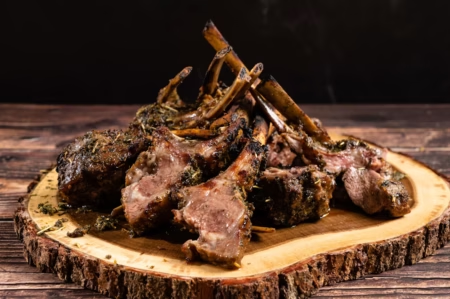
The Halal market is one of the fastest-growing consumer segments in the world. Globally valued at trillions of dollars, this market—driven by a Muslim population of nearly two billion—represents a colossal opportunity for food companies, including those based in the United States. For any American food manufacturer looking to serve the domestic Muslim community or, more significantly, tap into the lucrative export markets in the Middle East, Southeast Asia, and beyond, obtaining a credible halal food certificate is not just an option—it is a mandatory and strategic business necessity.
In the U.S., the certification landscape is managed not by a single government body but by a network of private, highly respected organizations. This decentralized system requires careful due diligence from food businesses. Choosing the right Halal Certification Agency is the first and most critical step in a journey that promises increased market share and enhanced consumer trust.
The Imperative of Halal Certification in the USA
The demand for Halal-certified products in the United States continues to surge. The American Muslim population is diverse and growing, and consumers are increasingly seeking assurance that the food they buy adheres to Islamic dietary laws.
Halal is an Arabic term meaning “permissible” or “lawful.” In the context of food, it dictates not only what ingredients are allowed but also how they are sourced, processed, manufactured, and handled. Prohibited items, or Haram, include pork and its by-products, alcohol, and meat from animals that were not slaughtered according to Dhabihah (Islamic ritual slaughter).
For a US food company, the benefits of acquiring certification are multi-fold:
- Market Expansion: It immediately opens up products to a vast domestic and international Muslim consumer base.
- Trust and Credibility: A recognized halal logo food certification mark on a product acts as a stamp of approval, building confidence with consumers who rely on these symbols.
- Export Readiness: Many Muslim-majority nations, such as Indonesia, Malaysia, and the UAE, have strict regulatory bodies (like BPJPH, JAKIM, and ESMA) that require accredited certification for imported goods.
The core of Halal certification lies in the rigorous vetting of ingredients, processes, and facilities to eliminate the risk of cross-contamination with Haram substances.

Spotlight on Leading Halal Certification Providers
Selecting the right certification partner depends on your specific product, target market (domestic or export), and the school of thought (madhhab) you wish to align with. Here are some of the Halal Certification providers recognized for their comprehensive and reliable services in the USA:
1. Islamic Food and Nutrition Council of America (IFANCA)
As one of the oldest and most globally recognized Halal certifying bodies in North America, IFANCA carries substantial weight.
- Key Recognition: Its “Crescent-M” trademark is one of the most visible and trusted Halal symbols worldwide.
- Expertise: IFANCA is known for its rigorous scientific and technical approach, providing certification across various industries, including food, beverages, and pharmaceuticals.
- Global Reach: Recognized by major international Halal authorities, IFANCA certification is an excellent choice for companies with strong export ambitions.
2. Islamic Services of America (ISA)
With decades of experience, ISA is a long-standing authority in the industry, providing reliable Halal assurance to manufacturers globally.
- History and Trust: ISA is one of the most established US-based halal certifiers, serving a wide range of industries including meat, poultry, flavors, and ingredients.
- Service Model: They offer a straightforward certification process that emphasizes technical review and on-site inspection to ensure adherence to Shariah requirements.
3. American Halal Foundation (AHF)
AHF is a dynamic certification body recognized for its international accreditations and modern approach to Halal assurance.
- International Accreditation: AHF is well-regarded globally, making its certificate a powerful tool for exporting to major Muslim markets.
- Scope: They offer comprehensive services that cover not just ingredients and processing, but also the often-overlooked area of food packaging halal certificate requirements, ensuring all elements of the final product are compliant.
4. Halal Food Council USA (HFC-USA)
HFC-USA is a highly-regarded organization dedicated to ensuring the authenticity and reliability of Halal food products through thorough inspection and certification processes.
- Focus: They specialize in certification for meat and poultry, beverages, bakery items, and more, providing comprehensive auditing services.
- Credibility: The HFC-USA mark is trusted by consumers, enhancing the credibility of companies aiming to establish a strong presence in the US and international Halal markets.
5. Halal Transactions of Omaha (HTO)
While its name suggests a regional focus, HTO is a nationally respected certifier, particularly dominant in the meat and poultry sector.
- Specialization: HTO provides rigorous certification specifically for meat processors and food manufacturers, ensuring strict adherence to Dhabihah (Islamic slaughter) guidelines from source to final product.
- Integrity: Their attention to detail and commitment to uncompromising Halal standards make them a top choice for companies in the animal-product supply chain.
The Certification Roadmap: A Step-by-Step Guide
The process for obtaining a Halal certification, while rigorous, follows a standardized structure designed to ensure compliance at every stage of production. US food companies can expect the following typical steps when engaging Halal Certification services in USA:
Step 1: Application and Documentation Submission
The company submits a formal application to the chosen agency, providing a detailed list of all products, a comprehensive list of all ingredients (including additives, processing aids, and flavorings), their suppliers, and detailed flowcharts of the entire manufacturing process.
Step 2: Technical Review and Ingredient Vetting
The agency’s Halal experts meticulously review all documentation. This is a critical stage where every single ingredient and raw material is vetted to confirm it is sourced from a permissible (Halal) origin and is free from any Haram contaminants. The agency may require Halal certificates from a company’s own ingredient suppliers.
Step 3: On-Site Audit and Inspection
A qualified Halal inspector or auditor visits the manufacturing facility. The purpose of this audit is to verify that the theoretical process outlined in the documents is strictly adhered to in practice. The inspector will check:
- Sanitation procedures and cleaning chemicals.
- Storage areas and segregation of Halal and non-Halal materials.
- Equipment usage and dedicated production lines (if applicable).
- Staff training and awareness of Halal compliance protocols.
Step 4: Final Certification and Issuance
If the facility and products meet all the established Halal standards, the Halal Certification Agency issues an official certificate. This document grants the company the right to use the agency’s halal food certification mark on their approved products for a specified period, typically one year.
Step 5: Ongoing Monitoring and Renewal
Halal compliance is a continuous commitment. The agency conducts regular, often annual, re-audits and spot-checks to ensure that standards are maintained. Companies must also notify the agency immediately of any changes in ingredients, suppliers, or production processes.
Navigating the Future of Halal Assurance
As the Halal market evolves, so do the assurance mechanisms. Modern Halal Certification Agency providers are increasingly leveraging technology to enhance transparency and security. For example, some agencies are implementing blockchain-based tracking systems, which allow consumers to scan a code and instantly trace the Halal status of a product back to its origin, providing an unprecedented level of trust and accountability.
A standout among these forward-thinking providers is Halal Watch World. Renowned for setting a global gold standard in Halal assurance, Halal Watch World (HWW) offers US food manufacturers an unparalleled combination of stringent compliance and cutting-edge, blockchain-based traceability. For US businesses seeking not only domestic acceptance but also maximum international recognition, HWW provides comprehensive certification that integrates with modern supply chain technology, ensuring that their Halal stamp is trusted by both retailers and consumers across the globe.
Conclusion: An Investment in Trust
For any food company in the USA, acquiring a Halal certificate is a strategic investment in ethical business practices and market growth. The increasing size and purchasing power of the Halal consumer base mean that ignoring this market is overlooking a significant revenue opportunity. By partnering with one of the reputable Halal Certification services in USA, businesses can confidently label their products, build deep consumer trust, and gain a competitive edge in one of the most exciting and dynamic global food markets.