
Close Menu
NERDBOT
    Facebook X (Twitter) Instagram YouTube
    Subscribe
    NERDBOT
    • News
      • Reviews
    • Movies & TV
    • Comics
    • Gaming
    • Collectibles
    • Science & Tech
    • Culture
    • Nerd Voices
    • About Us
      • Join the Team at Nerdbot
    NERDBOT
    Home»Movies»4 Franchise-to-Movie Adaptations that Were Super Disappointing
    Movies

    4 Franchise-to-Movie Adaptations that Were Super Disappointing

    Loryn StoneBy Loryn StoneSeptember 3, 20187 Mins Read
    Share
    Facebook Twitter Pinterest Reddit WhatsApp Email

    This is a “Nerd Voices” contributor article by Nerdbot reader Jonathan Meisner. You can follow him on Twitter!


    Ever have something you loved get re-imagined by someone else?

    Of course, you have, we’ve all experienced situations like that. They try to put their own spin on it and the result is just lackluster or is missing the vital components of what made you love it in the first place.

    This can come in several different forms. Some cases it could be beloved cartoons that you held dear as a young child or a badass video game that was adapted for the silver screen.

    Today we’re going to look at four such examples, where a beloved franchise from our youth left us with feelings of disappointment, some maybe more than others.

    Let’s roll out (that’s a teaser, kids).


    4) Street Fighter: The Movie
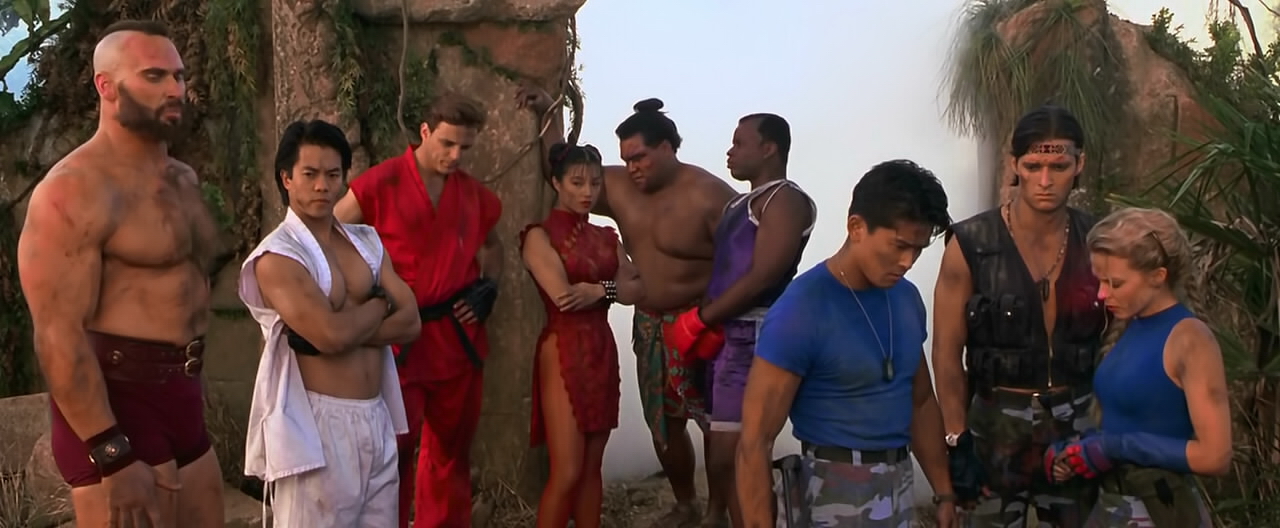
    Image result for street fighter movie

    Growing up in the 80’s, I had a local video arcade I would frequent as much as humanly possible and sunk as many quarters as I could scrounge together at any machine that was available for me to play.

    When the early 90’s rolled around and my arcade got Street Fighter, I became a World Warrior fanatic!

    I’d pony up to the machine and dump quarter after quarter into that bad boy and waste away the afternoon as Ken or Ryu. By 1994 when there was word of a Street Fighter movie hitting the big screen, I was among the many kids that was stoked to see how this would play itself out.

    It was like a hadoken to the chest.

    Of course, as with any good movie, or just movie in general, the audience deserves some semblance of a story and a plot, I wasn’t expecting fight scene after fight scene. But I was also expecting something a little closer to Bruce Lee’s Enter the Dragon, or an older JCVD film like Bloodsport with a tournament of badass fighters duking it out at the forefront of the film with the plot being essential, but ultimately secondary.

    While we did get several of the Street Fighter characters on the screen, most notably Guile portrayed by Jean Claude Van Damme and M. Bison as played by Raul Julia, the end results were less than inspired, in fact the whole thing just fell flat.

    Unfortunately, Raul Julia became quite ill on the set of a film he was working on before Street Fighter, but he soldiered on and made this film, mainly to spend time with his children who were fans of the game. This would however be his final big screen performance before his untimely death, and while it’s not an Overdrawn at the Memory Bank level of disappointing, it’s no mamushka either.


    3) TMNT II: The Secret of the Ooze

    Image result for secret of the ooze
    Stop looking at me, Swan!

    I saw the first Teenage Mutant Ninja Turtles movie in theaters as a kid and loved it. Although the whole “is Raph gonna die or not” section of that film did freak me out a little.

    One of the complaints about that first film however is that it was a little too dark in tone. Well, if that was the case Teenage Mutant Ninja Turtles II: The Secret of the Ooze cured that problem by doing a complete 180 and being as kid friendly as possible.

    After getting the Turtles, Master Splinter, Casey Jones and April in the first film, fans would assume the sequel would give us Krang, maybe the Technodrome and Dimension X would make an appearance, or at the very least we’d see Bebop and Rocksteady show up and give our heroes in a half shell a hard time.

    Instead audiences were served up Tokka and Rahzar as replacements, along with Vanilla Ice and his cringeworthy Ninja Rap, then we got the rather anti-climatic finale of the film.

    Shredder gets upgraded to Super Shredder thanks to drinking the last vial of the ooze that was the big selling point throughout the film, and here comes the big boss battle we’ve waited 90 minutes for, and…he pulls a dock down on himself in a fit of PG-13 level roid rage.

    Raph, Mikey, Leo and Donnie broke more of a sweat dancing on stage with Vanilla Ice, and I hit eject on my VCR faster than his rap career ended.


    2) Masters of the Universe

    Image result for masters of the universe movie

    It goes without saying that He-Man and the Masters of the Universe was a wildly popular cartoon with kids in the 80’s.

    By 1987 its popularity was beginning to wane, so what better idea than to release a live action version of the animated series?

    My imagination ran wild wondering what Eternia would look like on the big screen, how the struggle between He-Man and Skeletor would play out in front of my eyes, and how epic would the clash between good and evil be?

    Unfortunately, this film did not have the power.

    The first and major problem for me at least is that He-Man, Teela and Man-At-Arms wind up on modern day Earth. I’ve never enjoyed when a sword and sorcery character is thrust into modern day Earth, so it can be played off for laughs with the whole “fish out of water” trope (See Beastmaster 2 as another example…or not).

    There’s also no Orko, there’s no Battle Cat, but there is some nonsense about a Cosmic Key, and the actor who played Strickland from Back to the Future shows up as a cop trying to make sense of this mess, and I was waiting for him to start telling He-Man he was a slacker.

    The only saving grace of this film is the performance of Frank Langella as Skeletor. Sure, he’s not the lovable goofball we grew up with in the cartoon but go back and watch the movie (if you dare) and tell me he isn’t into his role. Dude is chewing scenery like it’s sunshine acid from the 70’s.

    I’d wager it’s a safe bet that’s what the writers were on at the time as well.


    1) Transformers the Movie

    Image result for transformers the movie 1986

    I can hear you all now. How can the 1986 film be considered a disappointment? Are you sure you don’t mean all the Michael Bay Transformers films?

    Trust me, I could go on for days about the Bay films.

    Let me sum it up for you in three simple words.

    Optimus. Prime. Dies.

    Alright, maybe traumatizing is a better word than disappointing but I’m sticking with it.

    Don’t get me wrong, I absolutely love this movie. The soundtrack, the scope of the story, Unicron. There’s so much badassery in this film. But man, when Optimus dies, for me that’s the pinnacle of disappointment. It was a total gut punch for me and undoubtedly all Transformers fans at the time.

    Obviously most of us were too young to understand the film in front of our eyes was a cash grab to promote the new toy line, but there we were, being subliminally told to forget our old Transformer friends and saddle up to the new ones.

    Let’s talk Ultra Magnus for a minute. I wanted to like him, I really did. He looked cool, he was voiced by Robert “Unsolved Mysteries” Stack, and Optimus passes on the Matrix of Power to him, so he can lead the Autobots during their “darkest hour”.

    But he ends up as nothing more than a red herring, a sacrificial lamb for Galvatron, Scourge and the Sweeps to mow down faster than I mow down a Zesty Avalanche roll at my favorite sushi restaurant.

    All good things eventually come to an end, I get that. I continued to watch Transformers after its season 3 premiere and liked the new characters such as Galvatron and Rodimus Prime well enough, but after this film was released instead of being more than meets the eye, it would really never be the same for me again.


    Do you have a not-so-favorite cartoon/video game/toy line to movie adaptation? Are there any real junky ones we missed? Tell Nerdbot about it in the comments!

    Do You Want to Know More?

    Share. Facebook Twitter Pinterest LinkedIn WhatsApp Reddit Email
    Previous ArticleJoker Movie Director Teases Start of Production
    Next Article 6 Pieces of Obsolete Tech (That Hung Around Longer Than You Think)
    Loryn Stone
    • Website
    • Facebook
    • X (Twitter)
    • Instagram

    Loryn Stone has dedicated her life to the written Word of the Nerd. Her writing has also been published on other pop culture websites such as Cracked, LoadScreen, PopLurker, and Temple of Geek. Her debut young-adult novel "My Starlight" (a contemporary love letter to fandom, friendship, anime, cosplaying, love, and loss) is out now by Affinity Rainbow Publications. When she's not writing, Loryn's other interests include collecting robots (Megazords, specifically), playing bass, and blasting metal.

    Related Posts

    "Lights Out," 2016

    Connor Osborn McIntyre Attached to Write “Lights Out 2”

    March 30, 2026
    "Happy Death Day 2U," 2019

    Jessica Rothe Says “Happy Death Day 3” is ‘Just a Matter of When’

    March 27, 2026

    Andrew Garfield Watched the ‘Controversial’ “Harry Potter” Movies

    March 27, 2026
    Glen Powell's casting announcement as Fox McCloud in “Super Mario Galaxy Movie”

    “Super Mario Galaxy Movie” Cast Adds Glen Powell as Fox McCloud

    March 27, 2026

    Lion King Singer Sues Comedian for Purposely Mistranslating Lyrics

    March 26, 2026

    “Murder, She Wrote” Revived as Film Starring Jamie Lee Curtis

    March 26, 2026
    • Latest
    • News
    • Movies
    • TV
    • Reviews
    "Life of a Showgirl," 2025

    Taylor Swift Sued Over Trademark For “The Life of a Showgirl”

    March 30, 2026
    What Goes Into SaaS Video Production And Why It's Different From Regular Video

    What Goes Into SaaS Video Production And Why It’s Different From Regular Video

    March 30, 2026
    Most studios searching for a match-3 level design company are looking for five different things. Some need levels built from scratch, others require a live game rebalanced before churn compounds, and some demand a content pipeline that won't fall behind. These are different problems, and they map to multiple types of companies. The mistake most studios make is treating "match-3 level design" as a single service category and evaluating every company against the same criteria. A specialist who excels at diagnosing retention problems in live games is the wrong hire for a studio that needs 300 levels built in 2 months. A full-cycle agency that builds from concept to launch isn't the right call for a publisher who already has engineering and art in place and just needs the level design layer covered. This guide maps 7 companies for match-3 level design services to the specific problem each one is built to solve. Find your problem first. The right company follows from there. What Match-3 Level Design Services Cover The term "level design" gets used loosely in this market, and this causes bad hires. A studio that excels at building levels from scratch operates dissimilarly from one that diagnoses why a live game's difficulty curve is losing players (even if both describe their service the same way on a website). Match-3 level design breaks into four distinct services, each requiring different expertise, different tooling, and a different type of partner. Level production — designing and building playable levels configured to a game's mechanics, obstacle set, and difficulty targets. This is what most studios mean when they say they need a level design partner, and it's the service with the widest range of quality in the market. Difficulty balancing and rebalancing — using win rates, attempt counts, and churn data to calibrate difficulty across hundreds of levels. Plus, this includes adjusting live content when the data shows a problem. Studios that only do level production typically don't offer this. Studios that do it well treat it as a standalone service. Live-ops level design covers the ongoing content pipeline a live match-3 game requires after launch (seasonal events, new level batches, limited-time challenges) sustained at volume and consistent in quality. This is a throughput and process problem as much as a design problem. Full-cycle development bundles level design inside a complete production engagement: mechanics, art, engineering, monetization, QA, and launch. Level design is one function among many. Depth varies by studio. Knowing which service you need before you evaluate a single company cuts the list in half and prevents the most common mistake in this market: hiring a full-cycle agency to solve a level design problem, or hiring a specialist to build a product from scratch. The List of Companies for Match-3 Level Design Services The companies below were selected based on verified credentials, named shipped titles where available, and the specific service each one is built to deliver. They are ranked by how well their capabilities match the service types outlined above. A specialist who does one thing exceptionally well sits above a generalist who does many things adequately. SolarSpark | Pure-play match-3 level design specialist SolarSpark is a remote-first studio built exclusively around casual puzzle game production. With 7+ years in the genre and 2,000+ levels shipped across live titles including Monopoly Match, Matchland, and KitchenMasters, it is the only company on this list that does nothing but match-3 level design. Level design services: Level production, difficulty curve planning, fail-rate balancing, obstacle and booster logic design, live-ops pipeline, competitor benchmarking, product audit and retention diagnostic. Verdict: The strongest pure specialist on this list. When level design is the specific constraint, SolarSpark is the right choice. What they do well: Every level is built around difficulty curves, fail/win balance, obstacle sequencing, and booster logic, measured against targets before delivery. Competitor benchmarking is available as a standalone service, mapping your game's difficulty curve and monetization structure against current top performers with specific, actionable output. Where they fit: Studios with a live or in-development game that need a dedicated level design pipeline, a retention diagnostic, or a one-off audit before soft launch. Honest caveat: SolarSpark does not handle art, engineering, or full-cycle development. Logic Simplified | Unity-first development with analytics and monetization built in Logic Simplified specializes in Unity-powered casual and puzzle games, with match-3 explicitly in their service portfolio. Operating for over a decade with clients across multiple countries, the studio positions itself around data-informed development: analytics, A/B testing, and monetization are integrated into the production process. Level design services: Level production, difficulty progression design, obstacle and blocker placement, booster and power-up integration, A/B tested level balancing, customer journey mapping applied to level flow. Verdict: A credible full-cycle option for studios that want analytics and monetization treated as design inputs from day one, not as post-launch additions. What they do well: Logic Simplified builds analytics and player behavior tracking into the design process. Their Unity expertise is deep, and their stated MVP timeline of approximately three months is competitive at their price point. India-based rates make full-cycle development accessible without requiring a Western agency budget. Where they fit: Studios building a first match-3 title that needs the full production chain handled by a single vendor, with analytics built in from the start. Honest caveat: No publicly named match-3 titles with verifiable App Store links appear in their portfolio. Ask for specific live game references and retention data during the first conversation before committing. Cubix | US-based full-cycle match-3 development with fixed-cost engagement Cubix is a California-based game development company with a dedicated match-3 service line covering level design, tile behavior, booster systems, obstacles, UI/UX, and full production on Unity and Unreal Engine. 30+ in-house animators can cover the full scope of puzzle game production. Level design services: Level production, combo and difficulty balancing, blocker and locked tile placement, move-limit challenge design, booster and power-up integration, scoring system design. Verdict: A viable full-cycle option for studios that need a Western-based partner with transparent fixed-cost pricing and documented match-3 capability. What they do well: Cubix covers the full production chain in one engagement, with strong visual production backed by an in-house animation team. Their fixed-cost model is a practical differentiator for studios that have been burned by scope creep on previous outsourcing contracts. Staff augmentation is also available for studios that need talent to plug into an existing pipeline. Where they fit: Studios that want a US-based full-cycle partner with predictable budgets, cross-platform delivery across iOS, Android, browsers, and PC, and a single vendor to own the concept through launch. Honest caveat: Named shipped match-3 titles are not prominently listed in their public portfolio. This is a verification gap worth closing during vetting, not a disqualifier on its own. Galaxy4Games | Data-driven match-3 development with published retention case studies Galaxy4Games is a game development studio with 15+ years of operating history, building mobile and cross-platform games across casual, RPG, and arcade genres. Match-3 is a named service line. What distinguishes them from most studios on this list is a level of public transparency about retention data. Their case studies document real D1 and D7 numbers from shipped titles. Level design services: Level production, difficulty curve development, booster and obstacle design, progression system design, LiveOps level content, A/B testing integration, analytics-based balancing. Verdict: The most transparent full-cycle option in terms of real retention data. For studios that want to see numbers before they hire, Galaxy4Games offers evidence most studios keep private. What they do well: Their Puzzle Fight case study documents D1 retention growing to 30% through iteration. Their modular system reduces development time and costs through reusable components, and their LiveOps infrastructure covers analytics, event management, and content updates as a planned post-launch function. Where they fit: Studios that need a data-informed full-cycle match-3 partner and want to evaluate a studio's methodology through published results. Honest caveat: Galaxy4Games covers a broad genre range (casual, RPG, arcade, educational, and Web3), which means match-3 is one of several service lines rather than a primary focus. Zatun | Award-winning level design and production studio with 18 years of operating history Zatun is an indie game studio and work-for-hire partner operating since 2007, with game level design listed as a dedicated named service alongside full-cycle development, art production, and co-development. With 250+ game titles and 300+ clients across AAA studios and indie teams, this agency has one of the longest track records. Level design services: Level production, difficulty progression design, level pacing and goal mapping, game design documentation, Unity level design, Unreal level design, level concept art. Verdict: A reliable, experienced production partner with a long track record and genuine level design depth. What they do well: Zatun's level design service covers difficulty progression, pacing maps, goal documentation, and execution in Unity and Unreal. Their 18 years of operation across 250+ titles gives them a reference library of what works across genres. Their work-for-hire model means they can step in at specific production stages without requiring ownership of the full project. Where they fit: Studios that need a specific level design or art production function covered without a full project handoff. This can be useful for teams mid-production that need additional capacity on a defined scope. Honest caveat: No publicly named match-3 titles appear in Zatun's portfolio, their verified work spans AAA and strategy genres; match-3 specific experience should be confirmed directly before engaging. Gamecrio | Full-cycle mobile match-3 development with AI-driven difficulty adaptation Gamecrio is a mobile game development studio with offices in India and the UK, covering match-3 development as an explicit service line alongside VR, arcade, casino, and web-based game development. Their stated differentiator within match-3 is AI-driven difficulty adaptation. Thus, levels adjust based on player skill. Level design services: Level production, AI-driven difficulty adaptation, booster and power-up design, progression system design, obstacle balancing, social and competitive feature integration, monetization-integrated level design. Verdict: An accessible full-cycle option with a technically interesting differentiator in AI-driven balancing. What they do well: Gamecrio builds monetization architecture into the level design process: IAP placement, rewarded ad integration, battle passes, and subscription models are considered alongside difficulty curves and obstacle sequencing. The AI-driven difficulty adaptation is a genuine technical capability that more established studios in this market have been slower to implement. Where they fit: Early-stage studios that need a full-cycle match-3 build with monetization designed in from the first level. Honest caveat: No publicly named shipped match-3 titles are listed on their site — request live App Store links and verifiable retention data before committing to any engagement. Juego Studios | Full-cycle and co-development partner with puzzle genre credentials and flexible engagement entry points Founded in 2013, Juego Studios is a global full-cycle game development and co-development partner with offices in India, USA, UK, and KSA. With 250+ delivered projects and clients including Disney, Sony, and Tencent, the studio covers game development, game art, and LiveOps across genres. Battle Gems is their verifiable genre credential. Level design services: Level production, difficulty balancing, progression system design, booster and mechanic integration, LiveOps level content, milestone-based level delivery, co-development level design support. Verdict: A well-resourced, credible full-cycle partner with a flexible engagement model that reduces the risk of committing to the wrong studio. What they do well: Juego's engagement model is flexible: studios can start with a risk-free 2-week test sprint, then scale to 20+ team members across modules without recruitment overhead. Three engagement models (outstaffing, dedicated teams, and managed outsourcing) let publishers choose how much control they retain versus how much they hand off. LiveOps is a named service line covering analytics-driven content updates and retention optimization after launch. Where they fit: Studios that need a full-cycle or co-development partner for a match-3 build and want to test the relationship before committing to full project scope. Honest caveat: Puzzle and match-3 are part of a broad genre portfolio that also spans VR, Web3, and enterprise simulations. How to Use This List The seven companies above cover the full range of what the match-3 level design market offers in 2026. The quality range is real, and the right choice depends on which service type matches the problem you're trying to solve. If your game is live and retention is the problem, you need a specialist who can diagnose and fix a difficulty curve. If you're building from zero and need art, engineering, and level design bundled, a full-cycle partner is the right call and the specialist is the wrong one. The honest caveat pattern across several entries in this list reflects a real market condition: verified, named match-3 credentials are rarer than studios' self-descriptions suggest. The companies that couldn't point to a live title with an App Store link were flagged honestly. Asking for live game references, retention data, and a first conversation before any commitment are things you can do before signing with any studio on this list.

    Best AI Tools for Content Creators in 2026

    March 30, 2026
    Best Crypto to Buy Now: What Investors Are Watching in the Changing Digital Asset Market 

    Best Crypto to Buy Now: What Investors Are Watching in the Changing Digital Asset Market 

    March 30, 2026
    "Life of a Showgirl," 2025

    Taylor Swift Sued Over Trademark For “The Life of a Showgirl”

    March 30, 2026

    Mark Wahlberg Launches 4AM Club Challenge YouTube Series

    March 26, 2026
    "The Shrouds," 2024

    “The Shrouds,” SeeMeRot, & The History of Corpse Cameras

    March 25, 2026

    “They Will Kill You” A Violent, Blood-Splattering Good Time [review]

    March 24, 2026
    "Lights Out," 2016

    Connor Osborn McIntyre Attached to Write “Lights Out 2”

    March 30, 2026
    "Happy Death Day 2U," 2019

    Jessica Rothe Says “Happy Death Day 3” is ‘Just a Matter of When’

    March 27, 2026

    Andrew Garfield Watched the ‘Controversial’ “Harry Potter” Movies

    March 27, 2026
    Glen Powell's casting announcement as Fox McCloud in “Super Mario Galaxy Movie”

    “Super Mario Galaxy Movie” Cast Adds Glen Powell as Fox McCloud

    March 27, 2026
    “Malcolm in the Middle: Life’s Still Unfair,” 2026

    “Malcolm in the Middle” Could Get a Full-Fledged Reboot

    March 30, 2026

    Survivor 50 Episode 6 Predictions: Who Will Be Voted Off Next?

    March 27, 2026

    “Star Trek: Starfleet Academy” to End With 2nd Season

    March 23, 2026

    Paapa Essiedu Faces Death Threats Over Snape Casting in HBO’s Harry Potter Series

    March 22, 2026

    “They Will Kill You” A Violent, Blood-Splattering Good Time [review]

    March 24, 2026

    “Project Hail Mary” Familiar But Triumphant Sci-Fi Adventure [review]

    March 14, 2026

    “The Bride” An Overly Ambitious Creature Feature Reimagining [review]

    March 10, 2026

    “Peaky Blinders: The Immortal Man” Solid Send Off For Everyone’s Favorite Gangster [review]

    March 6, 2026
    Check Out Our Latest
      • Product Reviews
      • Reviews
      • SDCC 2021
      • SDCC 2022
    Related Posts

    None found

    NERDBOT
    Facebook X (Twitter) Instagram YouTube
    Nerdbot is owned and operated by Nerds! If you have an idea for a story or a cool project send us a holler on Editors@Nerdbot.com

    Type above and press Enter to search. Press Esc to cancel.