



By Tyler McKenna, TheRX
TheRX offshore sportsbook rankings, how TheRX evaluates sportsbooks
Sports bettors love debating picks. Understanding sportsbook rankings can help bettors compare pricing, rules, banking options, reliability, and other important factors.
Who covers tonight? Is the favorite overpriced? The total too low? Is that quarterback worth four points to the spread?
Those are the fun questions.
The less exciting question is often just as important:
Where are you placing the bet?
Two bettors can make exactly the same prediction and end up with very different results over time because one consistently gets better prices, understands the house rules and uses sportsbooks that fit his betting style.
The other guy simply opens whichever betting app happens to be on his phone.
Finding winners matters.
But the sportsbook is part of the bet, too.
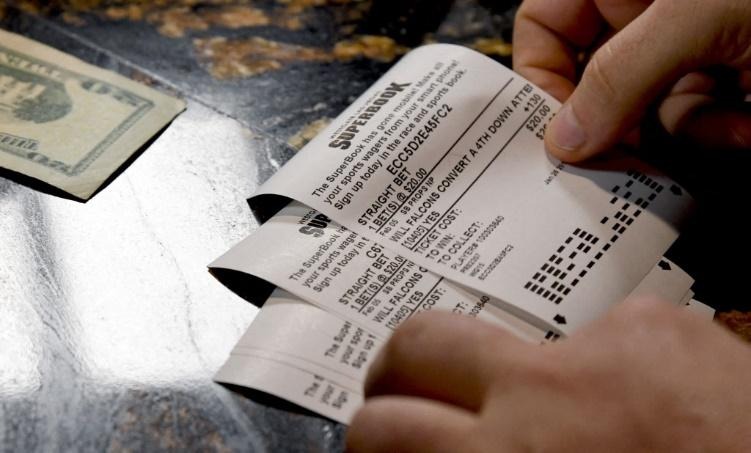
Image credit and caption: LAS VEGAS, NV – JANUARY 26: A bettor places wagers on some of the more than 400 proposition bets for Super Bowl LI between the Atlanta Falcons and the New England Patriots at the Race & Sports SuperBook at the Westgate Las Vegas Resort & Casino on January 26, 2017 in Las Vegas, Nevada. Ethan Miller/Getty Images/AFP (Photo by Ethan Miller / GETTY IMAGES NORTH AMERICA / Getty Images via AFP)
The Same Pick Can Have Two Different Prices
Suppose you like an NFL underdog.
One sportsbook offers +3 at -110.
Another offers +3.5 at -110.
The opinion is identical. The bet is not.
That extra half-point may look meaningless when you’re placing the wager. Then the game finishes 24-21 and suddenly it becomes the most important half-point in America.
Moneylines create the same problem.
If one sportsbook offers +145 and another has +155, repeatedly accepting the worse price means voluntarily giving away expected value.
No handicapper can eliminate losing bets.
But bettors can stop unnecessarily paying more for the same opinion.
That’s why line shopping remains one of the simplest habits serious bettors can develop.
Don’t Confuse a Great Bonus With a Great Sportsbook
Sportsbook marketing departments would prefer that customers judge operators by the largest number on the advertisement.
“$1,000 BONUS!”
Sounds fantastic.
The smaller print is usually more important.
Is it cash or promotional credit?
What is the wagering requirement?
Are minimum odds involved?
Can the funds be withdrawn immediately?
Do certain markets count toward rollover?
A large promotion with restrictive terms can be less valuable than a smaller offer with reasonable conditions.
And the bonus is temporary.
The sportsbook’s pricing, banking, limits and rules are what bettors live with after the introductory promotion disappears.
Before opening an account because of a giant bonus, ask whether you would still want to use that sportsbook without the bonus.
That’s a much better test.
Banking Should Be Researched Before You Win
Most bettors learn everything about a sportsbook’s deposit methods and almost nothing about its withdrawal policies.
It should probably be the opposite.
Depositing money is rarely the difficult part.
Before funding an account, understand:
- available withdrawal methods;
- processing expectations;
- minimum and maximum amounts;
- possible fees;
- verification requirements;
- any rules connected to bonuses or deposit methods.
If you’re fortunate enough to turn $500 into $2,500, that is not the moment you want to begin investigating how withdrawals work.
A sportsbook should be judged partly on how straightforwardly bettors can access their own money.
House Rules Can Turn Into Expensive Fine Print
Bettors spend enormous amounts of time analyzing statistics and surprisingly little time reading sportsbook rules.
Those rules determine what happens when something unusual occurs.
Does overtime count?
What happens if a baseball pitcher is scratched?
How is a tennis retirement graded?
What happens to a player prop if the athlete never enters the game?
How are postponed events handled?
Different sportsbooks can have different rules for situations that appear identical on the betting screen.
Most of the time, nobody notices.
Then one strange event happens and thousands of bettors suddenly become amateur contract lawyers.
Read the important rules before you’re arguing about them.
Reputation Matters More Than the Homepage
Every sportsbook wants to look trustworthy.
Modern betting sites have polished interfaces, live data, fast bet slips and enough colorful graphics to make opening an account feel effortless.
None of that tells you how an operator behaves when something goes wrong.
That requires history.
How long has the sportsbook operated?
Are withdrawal complaints isolated, or is there a repeated pattern?
Does customer support resolve problems?
Are rules clearly disclosed?
Have bettors consistently reported account or payout issues?
That is why comparison resources can be useful. TheRX offshore sportsbook rankings, for example, consider payout reliability, odds value, banking, house rules, mobile usability, limits, bonuses, support and recurring community feedback rather than treating the largest promotion as the deciding factor.
The important word there is fit.
There is no sportsbook that is automatically perfect for every bettor.

Image credit and caption: In this photo illustration taken on February 20, 2025, a user checks the betting company Wplay on a laptop while watching a football match in Bogota on February 17, 2025. For the first time, online sports betting will pay sales tax in Colombia. The worst armed conflict crisis in decades prompted the government to tax this important sector of the economy in a decision that strikes a chord with football fans. (Photo by Luis ACOSTA / AFP)
A Sharp Bettor and a Casual Bettor May Need Different Books
Imagine two customers.
One bets $25 NFL parlays from his phone every Sunday.
The other bets $2,000 sides, shops early lines and cares deeply about reduced juice.
Those bettors shouldn’t necessarily choose the same sportsbook.
The recreational bettor may value:
- easy mobile navigation;
- plenty of player props;
- simple deposits;
- promotions;
- same-game parlays.
The larger bettor may care more about:
- betting limits;
- early lines;
- reduced juice;
- market depth;
- withdrawal capacity.
That’s why sportsbook rankings without context can be misleading.
“Number one” only means something if the reviewer explains number one for whom.
Regulated and Offshore Sportsbooks Require Different Homework
Location also changes the equation.
State-regulated U.S. sportsbooks operate under the licensing and consumer-protection rules of the jurisdictions where they’re authorized.
Offshore sportsbooks operate outside U.S. state regulatory systems.
That distinction should never be hidden.
A customer using a regulated sportsbook generally has access to a state regulator if a serious dispute occurs. Someone considering an offshore operator needs to place additional weight on the sportsbook’s operating history, jurisdiction, banking record, rules and complaint patterns.
TheRX lays out how TheRX evaluates sportsbooks, including its approach to source quality, testing, complaints, scoring, disclosures and corrections.
Regardless of which kind of sportsbook somebody chooses, understanding who supervises the operator—and what recourse exists if something goes wrong—is part of responsible research.
The Cheapest Bet Isn’t Always the Best Bet
There is an interesting tension here.
You should shop for the best price.
But you shouldn’t blindly choose a sportsbook simply because it offers the best price on one wager.
Maybe Book A has +155 instead of +150.
Great.
But if Book A also has unclear withdrawal policies, poor customer service and a questionable history, those extra five cents probably aren’t worth much.
Sportsbook evaluation is about combining several factors:
Price + reliability + rules + banking + usability + limits.
No single category tells the whole story.
Keep Multiple Sportsbooks for the Right Reason
There is a legitimate argument for having more than one sportsbook account.
It isn’t because bettors need more places to chase losses.
It’s because different operators can serve different purposes.
One book may consistently have strong NFL numbers.
Another may offer deeper player props.
Another may have favorable baseball pricing.
One may simply be the best place to hold the majority of a bankroll because its banking and withdrawal process has earned trust.
Multiple accounts can also make line shopping possible.
But more sportsbooks shouldn’t mean less discipline.
Know how much total money you have committed to betting regardless of how many apps hold pieces of it.
Five $200 balances are still a $1,000 betting bankroll.

Image caption and credit: LAS VEGAS, NV – FEBRUARY 02: Some of the nearly 400 proposition bets for Super Bowl 50 between the Carolina Panthers and the Denver Broncos are displayed at the Race & Sports SuperBook at the Westgate Las Vegas Resort & Casino on February 2, 2016 in Las Vegas, Nevada. The newly renovated sports book has the world’s largest indoor LED video wall with 4,488 square feet of HD video screens measuring 240 feet wide and 20 feet tall. Ethan Miller/Getty Images/AFP (Photo by Ethan Miller / GETTY IMAGES NORTH AMERICA / Getty Images via AFP)
Handicap the Sportsbook Before You Handicap the Game
Sports bettors naturally want to spend their time finding winners.
That’s understandable.
Nobody gathers around a television on Sunday afternoon to celebrate an excellent withdrawal policy.
But long-term betting results are influenced by hundreds of small decisions that happen before kickoff.
Getting +3.5 instead of +3.
Paying -105 instead of -110.
Understanding rollover terms.
Knowing the house rules.
Using reasonable limits.
Choosing an operator with a credible history.
Avoiding emotional deposits after a bad night.
None of those decisions guarantees a winning season.
They simply stop bettors from making an already difficult game unnecessarily harder.
The next time you spend an hour handicapping a matchup, spend five additional minutes looking at where you’re about to place the wager.
Because picking the right side is only half the decision.
The other half is deciding who you trust to book it.


