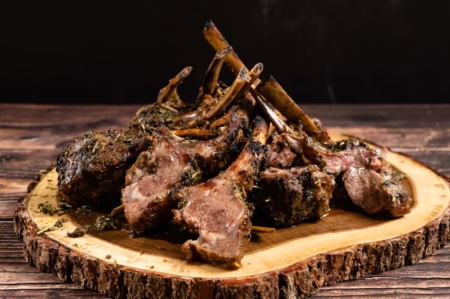
In today’s fast-paced food industry, consistency, quality, and efficiency are more important than ever. One technology that has revolutionized large-scale cooking operations is industrial sous vide equipment. While sous vide cooking is widely known in home kitchens and restaurants, its industrial application has taken food production to a completely new level.
Industrial sous vide systems are specifically designed for high-volume cooking environments such as food processing plants, catering services, and large commercial kitchens. These systems combine precision temperature control with automation to deliver uniform, safe, and high-quality food products at scale.
What Is Industrial Sous Vide Equipment?
Industrial sous vide equipment refers to advanced cooking systems that use controlled water temperatures to cook vacuum-sealed food in large quantities. Unlike small immersion circulators used at home, industrial systems are built to handle bulk production with greater efficiency and reliability.
These systems typically include:
- Large water baths or tanks
- Precision heating and circulation systems
- Automated controls and monitoring
- Integration with vacuum sealing and packaging lines
The goal is simple: to ensure that every product is cooked evenly, safely, and consistently—regardless of batch size.
Key Features of Industrial Sous Vide Systems
Industrial sous vide equipment is engineered with features that support large-scale operations. Some of the most important features include:
1. High-Capacity Cooking Tanks
Industrial systems are designed to process large volumes of food at once. These tanks can handle hundreds or even thousands of portions in a single cycle, making them ideal for mass production.
2. Precise Temperature Control
Maintaining an exact temperature is critical in sous vide cooking. Industrial systems use advanced sensors and control units to keep water temperature stable, ensuring consistent results across all batches.
3. Automated Operation
Automation is a major advantage in industrial settings. Many systems allow operators to program cooking times and temperatures, reducing the need for constant supervision and minimizing human error.
4. Energy Efficiency
Modern industrial sous vide equipment is designed to optimize energy usage. Insulated tanks and efficient heating systems help reduce operational costs while maintaining performance.
5. Integration with Production Lines
These systems can be integrated into existing food processing lines, including vacuum sealing, chilling, and packaging systems. This creates a seamless workflow from preparation to final product.
Benefits of Using Industrial Sous Vide Equipment
The adoption of industrial sous vide systems offers several significant advantages for food manufacturers and large-scale kitchens.
Consistent Product Quality
One of the biggest challenges in mass food production is maintaining consistency. Sous vide eliminates this issue by cooking every item at the same precise temperature, ensuring uniform texture and flavor.
Improved Food Safety
Cooking food in vacuum-sealed bags reduces the risk of contamination. Additionally, precise temperature control ensures that food reaches safe cooking levels, meeting strict food safety standards.
Enhanced Flavor and Texture
Sous vide cooking locks in natural juices and flavors, resulting in tender, flavorful products. This is especially beneficial for meats, seafood, and ready-to-eat meals.
Reduced Food Waste
Because sous vide cooking is highly controlled, there is less risk of overcooking or spoilage. This leads to better yield and reduced waste, which is crucial in large-scale operations.
Labor Efficiency
Automation reduces the need for manual monitoring and intervention. This allows staff to focus on other tasks, improving overall productivity.
Applications in the Food Industry
Industrial sous vide equipment is used across a wide range of food sectors. Its versatility makes it suitable for various applications, including:
- Meat Processing: Perfect for cooking beef, poultry, and pork with consistent results
- Seafood Production: Maintains delicate textures and flavors
- Ready-to-Eat Meals: Ideal for pre-packaged meals sold in supermarkets
- Catering Services: Enables bulk preparation with minimal quality loss
- Plant-Based Foods: Ensures even cooking of alternative protein products
This flexibility makes sous vide systems an essential part of modern food manufacturing.
Integration with Cook-Chill and Cook-Freeze Systems
Industrial sous vide equipment is often used in combination with cook-chill and cook-freeze processes. After cooking, food is rapidly cooled or frozen to preserve freshness and extend shelf life.
This integration offers several advantages:
- Longer product shelf life
- Easier storage and transportation
- Reduced need for preservatives
- Better inventory management
These systems are especially useful for businesses that distribute food over long distances.
Choosing the Right Industrial Sous Vide Equipment
Selecting the right system depends on several factors, including production volume, available space, and specific business needs.
Here are a few considerations:
- Capacity Requirements: Choose a system that matches your production scale
- Automation Level: Decide how much control and monitoring you need
- Energy Consumption: Look for energy-efficient models
- Ease of Maintenance: Equipment should be easy to clean and maintain
- Compatibility: Ensure it integrates well with your existing processes
Working with a reliable supplier is essential to ensure you get a system that meets your operational goals.
The Future of Industrial Sous Vide Technology
As the food industry continues to evolve, industrial sous vide technology is becoming more advanced. Innovations such as smart controls, IoT integration, and data tracking are making these systems even more efficient and user-friendly.
Manufacturers are also focusing on sustainability by developing energy-efficient systems and reducing water usage. These improvements not only lower costs but also support environmentally responsible practices.
Conclusion
Industrial sous vide equipment is transforming large-scale food production by combining precision, efficiency, and consistency. From improving product quality to enhancing food safety and reducing waste, the benefits are clear.
For food manufacturers, catering companies, and commercial kitchens, investing in industrial sous vide systems is a strategic move that can significantly improve operations and customer satisfaction.
As demand for high-quality, ready-to-eat food continues to grow, industrial sous vide technology will play an increasingly important role in shaping the future of the food industry.