Close Menu
NERDBOT
    Facebook X (Twitter) Instagram YouTube
    Subscribe
    NERDBOT
    • News
      • Reviews
    • Movies & TV
    • Comics
    • Gaming
    • Collectibles
    • Science & Tech
    • Culture
    • Nerd Voices
    • About Us
      • Join the Team at Nerdbot
    NERDBOT
    Home»Nerd Voices»NV Food»The Secret to Perfect Pairings in Food and Drink
    Freepik
    NV Food

    The Secret to Perfect Pairings in Food and Drink

    Jack WilsonBy Jack WilsonJune 16, 20258 Mins Read
    Share
    Facebook Twitter Pinterest Reddit WhatsApp Email

    Introduction:

    Pairing food and drink is not just a culinary art; it’s a symphony of flavors, textures, and sensory experiences designed to elevate the enjoyment of both elements. The right pairing brings balance, enhances taste, and reveals hidden notes in both the food and the beverage. Whether you’re sitting down to a formal dinner or indulging in a casual snack, thoughtful pairings can turn a simple meal into a memorable event. The key lies in understanding the interplay of flavors and how one element can complement or contrast with another to create harmony on the palate.

    Across cultures and cuisines, the concept of pairing has long guided how meals are prepared and consumed. From wine and cheese to tea and dim sum, the instinct to match flavors is nearly universal. This intuitive process is now being reinforced by food science, which explains the mechanics behind good pairings through factors like aroma compounds, fat content, acidity, and even mouthfeel. As we delve deeper into the nuances of pairing food and drink, we discover a world of sensory delight shaped by tradition, science, and personal taste.


    Understanding the science behind flavor compatibility:

    Flavor compatibility is largely governed by the interaction of taste molecules and sensory receptors in the mouth and nose. When two items share similar aromatic compounds, they are often perceived as naturally complementary. This principle—known as flavor pairing theory—explains why chocolate and red wine, or strawberries and balsamic vinegar, feel intuitively correct when tested together.

    The balance of basic taste elements—sweet, salty, bitter, sour, and umami—also plays a significant role. A sweet beverage can balance the heat of a spicy dish, while acidity in a drink might cut through the richness of fatty food. Understanding these interactions allows us to predict and engineer pairings that are pleasing and memorable.


    Classic pairings reveal the logic behind successful combinations:

    Traditional pairings have stood the test of time because they reflect deep cultural and sensory knowledge. Cheese and wine, for example, is more than just an elegant option—it works because the fat in cheese coats the palate, which is then cleansed by the acidity and tannins in the wine. Similarly, coffee and chocolate pair well due to shared roasted and bitter flavor notes.

    Looking closely at these combinations reveals several recurring principles:

    • Contrast: Balancing opposites, such as salty with sweet or acidic with fatty.
    • Complement: Matching similar flavor profiles or aromas for unity.
    • Context: Cultural habits and rituals that influence what is considered a “good” match.

    These strategies provide a framework that can be applied beyond traditional foods to include beverages like tea, beer, and even non-alcoholic alternatives.


    Texture plays a vital role in enhancing pairing experiences:

    Beyond flavor, texture is an often-overlooked aspect that can dramatically influence how pairings are perceived. Crisp foods may benefit from creamy beverages, just as oily foods often do well with fizzy or tannic drinks that cleanse the palate. The interplay of crunch, smoothness, and mouth-coating sensations contributes to the overall harmony of a pairing.

    In practice, this means considering how the physical qualities of each component work together. A light, flaky pastry might shine alongside a velvety latte, while a charred steak could pair best with a structured red wine that cuts through the protein’s chewiness. Matching textures as well as flavors ensures a more complete sensory experience.


    Temperature and aroma enhance or diminish food and drink synergy:

    Serving temperature affects how flavors are perceived. Cold drinks can mute sweetness and aroma, while warm drinks often enhance both. Similarly, the temperature of food influences its aroma release, which in turn impacts how it interacts with the drink it’s paired with. For example, warm apple pie with a chilled glass of Riesling offers contrasting but harmonized sensations.

    Aromas are also vital in pairing success. The nose perceives flavor before the tongue does, making scent the first layer of the eating experience. Matching or contrasting aromas—such as smoky dishes with peaty whiskey or herbal dishes with citrusy wine—enhances depth and complexity.


    Innovative pairing trends reflect evolving tastes and preferences:

    Contemporary food and drink culture has embraced bold experimentation. Chefs and mixologists now explore unexpected pairings that challenge traditional norms but delight adventurous palates. Unusual combinations—like blue cheese and dark chocolate or oysters and stout—are grounded in the same principles as classic pairings, just with a twist.

    A major trend is the inclusion of lifestyle-driven options such as low-alcohol drinks, zero-proof cocktails, and flavor-forward alternatives. The rise in vaping culture, for instance, has introduced a new layer to pairing strategies. Flavored vape products can be chosen to complement specific food profiles. Just like wine or tea, vape juices now offer a curated spectrum of taste experiences. A dessert vape might enhance a rich chocolate cake, while a citrus vape could lighten a seafood platter. These pairings reflect a growing desire for multi-sensory dining beyond the traditional palate.


    Cultural influences shape the way we define perfect pairings:

    What constitutes an ideal pairing varies greatly depending on regional traditions and culinary philosophy. In Japan, the pairing of sushi and green tea emphasizes clean flavors and digestive benefits. In Mexico, spicy street food is often enjoyed with sweet, effervescent drinks that cool the palate. These practices are deeply rooted in cultural experience and collective memory.

    Understanding the cultural context of a pairing enriches the experience. A meal becomes more than a combination of tastes—it becomes a storytelling platform. Exploring global food and drink customs opens up new pairing possibilities and deepens our appreciation for diversity in flavor logic.


    Seasonal ingredients and occasions influence pairing decisions:

    The best pairings often reflect what’s fresh, seasonal, and appropriate to the moment. A light white wine might feel refreshing in summer but underwhelming in winter. Similarly, rich hot chocolate complements the colder months, especially when paired with spiced or buttery pastries. Seasonality ensures the ingredients are at their flavor peak and naturally align in tone and intensity.

    Pairings also shift based on occasion. A formal dinner may call for structured wines and meticulously crafted courses, while a summer barbecue might benefit from casual beer-and-burger combos. Tuning your pairings to the setting elevates the overall experience and respects both the ingredients and the moment.

    Examples of seasonal pairing strategies:

    • Spring: Crisp greens with dry rosé or sparkling water with citrus infusions.
    • Summer: Grilled meats with pale ales or iced herbal teas.
    • Autumn: Root vegetables with aged reds or apple cider.
    • Winter: Hearty stews with dark beers or mulled wine.

    Sweetness and acidity provide essential structure to a pairing:

    Balancing sweetness and acidity is one of the most effective techniques in creating great pairings. Too much sweetness can become cloying without a sharp element to cut through it, while excessive acidity can feel harsh without something to smooth it out. Striking the right balance ensures the flavors remain vibrant and engaging throughout the meal.

    In desserts, this often involves pairing rich, sugary dishes with lightly acidic drinks to prevent palate fatigue. In savory dishes, a splash of lemon or vinegar can lift creamy sauces or fatty cuts. Meanwhile, beverages like Champagne or sparkling cider work across a range of flavor profiles thanks to their balanced acidity and effervescence, acting as a bridge between complex ingredients.


    The role of experimentation in discovering personal pairings:

    While guidelines are helpful, the most memorable pairings often come from personal discovery. For individuals with unique responsibilities—such as caring for elderly family members or navigating decisions related to Legal Guardianship Arizona, meal planning and pairing preferences may also reflect caregiving routines and lifestyle needs. Trial and error plays a central role in uncovering what truly delights your taste buds. Tasting multiple combinations and noting how they interact over time builds a mental map of your own preferences, which can then guide future culinary decisions.

    Experimentation can happen in structured settings like wine tastings or informally at home by mixing and matching leftovers with beverages on hand. Keeping a pairing journal, noting not just what was served but how it felt, smelled, and lingered on the palate, can help refine your sense of pairing intuition over time.

    Helpful tips for beginners include:

    • Start with a single focus—match one element (like sweetness or acidity).
    • Note how each bite and sip changes when paired together.
    • Trust your preferences even when they go against convention.

    Conclusion:

    The art of perfect pairings lies at the intersection of science, tradition, and personal exploration. By understanding the mechanics of taste, texture, aroma, and culture, anyone can elevate a simple meal into a multi-sensory experience. Whether guided by established rules or inspired by creative freedom, pairing food and drink thoughtfully deepens enjoyment and invites us to savor every bite and sip with intention.

    As tastes evolve and new experiences become available—whether through global cuisine, seasonal ingredients, or lifestyle changes—the world of pairing continues to expand. In this dynamic landscape, the secret to perfect pairings isn’t just about finding matches that work—it’s about creating moments that linger on the palate and in memory.

    Do You Want to Know More?

    Share. Facebook Twitter Pinterest LinkedIn WhatsApp Reddit Email
    Previous ArticleCan You Combine Pest Control with Home Maintenance Services?
    Next Article Staying Healthy and Energized During the Holidays with the Help of Shilajit Resin
    Jack Wilson

    Jack Wilson is an avid writer who loves to share his knowledge of things with others.

    Related Posts

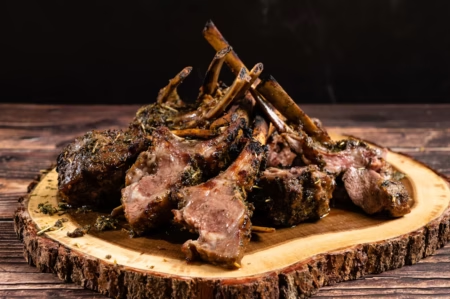
    a plate of food on wooden table

    Why Lamb Works for Both Casual and Special Meals

    July 29, 2026

    More Than a Quick Bite: Why Fresh Sandwiches Make Every Vacation Better

    July 22, 2026

    Mastering Your LA Move: How to Turn a Moving Day Nightmare into a Breeze

    July 15, 2026

    How Do Themed Sweets Make Holiday Gifting More Meaningful?

    July 15, 2026
    Creator workspace with concept art drafts, product image variations, and visual planning materials.

    From Fan Art to Product Shots: How AI Image Editors Help Creators Iterate Faster

    July 14, 2026
    You start researching app development, and the first quote you get from a professional development agency makes your stomach drop.

    The Indie Dev Side Hustle: Turning Passion Apps and Games Into Real Money

    July 13, 2026
    • Latest
    • News
    • Movies
    • TV
    • Reviews
    AI Prompt Generator: Why Effective Prompts Are Shaping the Future of Artificial Intelligence

    AI Prompt Generator: Why Effective Prompts Are Shaping the Future of Artificial Intelligence

    August 1, 2026
    Why the MaxFoot MF-33 Electric Tricycle Frame Deserves More Attention

    Why the MaxFoot MF-33 Electric Tricycle Frame Deserves More Attention

    August 1, 2026
    Buying a family cargo bike is different from buying a recreational e-bike. A front-load cargo trike may be expected to transport children, groceries, school bags, pets, and other heavy items several times a day. Motor reserve, battery capacity, braking hardware, passenger protection, and overall value therefore matter more than brand recognition alone. The Bunch Original 4+ and Addmotor E-325 are both front-loading electric cargo trikes with two wheels at the front and one at the rear. Both keep children or cargo visible while riding, and both use hydraulic disc brakes, torque-sensing pedal assistance, seven-speed Shimano drivetrains, and a 20 mph top speed. Their priorities, however, are noticeably different. Bunch offers more passenger seats and a polished premium ownership experience. Addmotor offers stronger performance, a larger battery, longer range, wider tires, and a substantially lower price. For many households, the E-325 therefore looks less like the budget alternative and more like the practical one. Bunch Original 4+ vs. Addmotor E-325 Specifications Category Addmotor E-325 Bunch Original 4+ Motor 750W rear hub, 1,400W peak 500W DAPU geared hub Maximum Torque 90Nm 45Nm Battery 48V 20Ah Samsung, 960Wh 48V 12.8Ah LG, 614Wh Claimed Range 60+ miles in PAS 1 20–30 miles Top Speed 20 mph 20 mph Total Payload 550 lbs 600 lbs Front Box Capacity 250 lbs 400 lbs Passenger Seats Two cushioned seats Four belted seats Tires 20 × 2.4 front / 24 × 3.0 rear 20 × 2.15 front / 24 × 2.0 rear Bike Weight Approximately 198 lbs 168 lbs Listed Price $3,699 $6,499 The current manufacturer listings confirm the major differences in battery size, motor output, seating capacity, range, payload, and price. How Many Passenger Seats Do You Really Need? The clearest advantage of the Bunch Original 4+ is its four-seat passenger box. It includes front and rear benches with four three-point seat belts, while its cargo area is rated for up to 400 pounds. Families that regularly transport three or four children may find this layout difficult to replace. The E-325 has two cushioned passenger seats and two seat belts. Its front box is rated for 250 pounds, while its overall payload limit is 550 pounds. That is below the Bunch bike’s 600-pound total rating, but it remains substantial for ordinary family use. The practical question is not which trike has the highest theoretical capacity. It is how many seats will actually be used every week. A family with one or two children gains little from paying for four positions. The E-325’s 36-inch-long, 25-inch-wide, and 23-inch-high box still provides generous room for children, pets, shopping bags, and daily supplies. Bunch is the logical choice when four seats are essential. For households carrying one child, two children, or a mixture of passengers and cargo, the E-325 offers the more balanced layout. More Motor Reserve for Real Loads Cargo trikes become demanding when starting from a stop, climbing a hill, or moving through an intersection with a loaded box. A motor that feels adequate during an empty test ride can feel far weaker after passengers and groceries are added. The Bunch Original 4+ uses a 500W motor producing 45Nm of torque. The Addmotor E-325 uses a 750W rear-mounted motor rated for up to 1,400W peak output and 90Nm of torque. That gives the Addmotor twice the stated torque. Because both trikes are limited to 20 mph, the stronger E-325 motor is not mainly about chasing speed. Its real benefit is additional reserve at lower speeds. More torque can make loaded starts feel less strained, reduce rider effort on inclines, and help maintain momentum in stop-and-go traffic. This matters in hilly neighborhoods and suburban areas where destinations are farther apart. A family cargo trike is already a heavy machine before anyone climbs aboard. Choosing the stronger drive system leaves more room for passengers and cargo without making the trike feel immediately overwhelmed. A Larger Battery Makes Daily Use Easier The Bunch Original 4+ has a 614Wh battery and a published range of 20 to 30 miles depending on terrain and load. The E-325 uses a 960Wh Samsung battery and is rated for more than 60 miles under PAS 1 conditions. Real-world range will vary with passenger weight, hills, weather, throttle use, speed, tire pressure, and assist level. Even so, battery capacity is objective: the E-325 stores approximately 56 percent more energy. That extra capacity matters even when the rider never attempts a 60-mile journey. It may allow several school runs and errands between charges while providing more breathing room when plans change. A parent can add a grocery stop or park visit without immediately worrying about returning home with a nearly empty battery. The Bunch range may be sufficient for short neighborhood routines. The Addmotor battery is better suited to riders who want their cargo trike to replace more car trips and who do not want charging to become a daily obligation. Wider Tires for Imperfect Neighborhood Roads The E-325 uses 20 × 2.4-inch front tires and a 24 × 3.0-inch rear tire. The Bunch Original 4+ uses 20 × 2.15-inch front tires and a 24 × 2.0-inch rear tire. Wider tires can add cushioning and create a larger contact area on imperfect pavement. They will not turn the E-325 into an off-road vehicle, but they can make cracks, patched asphalt, driveway transitions, and rough neighborhood streets feel less harsh. The wider rear tire also suits the stronger rear-mounted motor and the weight carried through the back of the trike. Both models use hydraulic disc brakes and include parking brakes. Addmotor specifies 180mm brake rotors on all three wheels. The E-325 also combines a mid-axis torque sensor with seven pedal-assist levels, allowing the motor response to feel more natural and controllable while carrying passengers. These are not glamorous features, but they affect nearly every journey. Parents need predictable braking when approaching intersections, while a parking brake helps prevent a loaded trike from rolling as children enter or leave the cargo box. The Price Difference Is Difficult to Ignore The Bunch Original 4+ is currently listed at $6,499, while the Addmotor E-325 is listed at $3,699. That creates a price difference of $2,800. Bunch partly justifies its premium with four-passenger seating, full UL 2271 and UL 2849 compliance, fully assembled delivery, and a strong family-cargo service model. Buyers who specifically need those benefits may accept the higher price. However, the E-325 does not exchange its lower price for entry-level hardware. It offers the stronger motor, twice the stated torque, a 960Wh Samsung battery, torque-sensing assistance, three-wheel hydraulic brakes, wider tires, a reinforced composite cargo box, and a two-year warranty. For a family that only needs two passenger seats, the Bunch premium becomes difficult to defend. The $2,800 difference could cover helmets, high-quality locks, weather equipment, maintenance, insurance, and accessories while still leaving money unspent. A premium cargo bike should provide benefits that match the buyer’s actual routine. Paying more for unused passenger seats does not improve the school run, increase range, or make a hill easier to climb. Which Cargo Trike Is Easier to Live With? The best family vehicle is not necessarily the one with the longest feature list. It is the one that removes the most inconvenience from everyday life. The E-325’s larger battery can reduce charging frequency. Its stronger motor provides greater assistance when the box is loaded. Its wider tires are appropriate for less-than-perfect streets, while its two-seat cargo area covers the needs of many small and medium-sized families. Bunch offers more seats, but Addmotor provides more performance in the areas riders will notice every day. Unless a household routinely transports more than two children, the E-325’s combination of range, power, cargo flexibility, and price is difficult to overlook. Final Verdict The Bunch Original 4+ remains a compelling specialist choice for families that regularly need four belted passenger positions. It also has a higher total payload rating, lower bike weight, and fully assembled delivery. For most other buyers, the Addmotor E-325 is the stronger overall value. It provides more motor power, twice the stated torque, a much larger battery, longer claimed range, wider tires, and a far lower purchase price. Its two-seat front box is sufficient for many families and remains useful for groceries, pets, work supplies, and weekend outings. Bunch wins the seating-capacity contest. Addmotor wins the broader comparison for power, range, flexibility, and cost. Unless four passenger seats are essential, the E-325 is the cargo trike that makes more sense for real family life.

    Bunch Electric Cargo Bike vs. Addmotor E-325: Which One Fits Real Family Life Better?

    August 1, 2026

    How to Get a Driver’s License in Miami Florida

    August 1, 2026
    "Spider-Man: Brand New Day," 2026

    “Spider-Man: Brand New Day” A More Mature, Emotional Spidey Adventure [Review]

    July 31, 2026

    LEGO Introduces SMART Play Gateways & Several New Sets at SDCC 2026

    July 23, 2026

    Jason Alexander Apologizes For ‘Inappropriate’ Underaged Courtney Stodden Sketch

    July 22, 2026

    Mara Wilson Shares Her Thoughts on a Potential “Matilda” Sequel

    July 21, 2026

    Tubi Indie Spotlight: “Blood and Breakfast” by Mark Byrne

    August 1, 2026
    "Spider-Man: Brand New Day," 2026

    “Spider-Man: Brand New Day” A More Mature, Emotional Spidey Adventure [Review]

    July 31, 2026

    Madeline Brewer, Emory Cohen, Nicholas Alexander Chavez Cast in “Possession” Reboot

    July 30, 2026

    Charles Parnell, Marta Kessler, Caleb Dolden Join Cast of “The Conjuring: First Communion”

    July 30, 2026

    “American Idol” Renewed, Showcases Network TV Issues

    July 30, 2026

    Ryan Murphy Says “American Horror Story” Season 13 Brings Together All Previous Seasons

    July 29, 2026

    Mike Flanagan’s “Carrie” Series Gets Release Date, Teaser Trailer

    July 27, 2026

    It’s a Good Time to be a “Stranger Things” Fan With 10th Anniversary Merch

    July 17, 2026
    "Spider-Man: Brand New Day," 2026

    “Spider-Man: Brand New Day” A More Mature, Emotional Spidey Adventure [Review]

    July 31, 2026

    “The Odyssey” A Flawed But Staggering Spectacle of Scale and Scope [review]

    July 17, 2026

    “Gail Daughtry and the Celebrity Sex Pass” Wizard of Oz Meets Screwball Sex Comedy

    July 10, 2026
    Jackass

    “Jackass: Best and Last” A Swan Song for Nut Taps [review]

    June 27, 2026
    Check Out Our Latest
      • Product Reviews
      • Reviews
      • SDCC 2021
      • SDCC 2022
    Related Posts

    None found

    NERDBOT
    Facebook X (Twitter) Instagram YouTube
    Nerdbot is owned and operated by Nerds! If you have an idea for a story or a cool project send us a holler on Editors@Nerdbot.com.

    Type above and press Enter to search. Press Esc to cancel.