

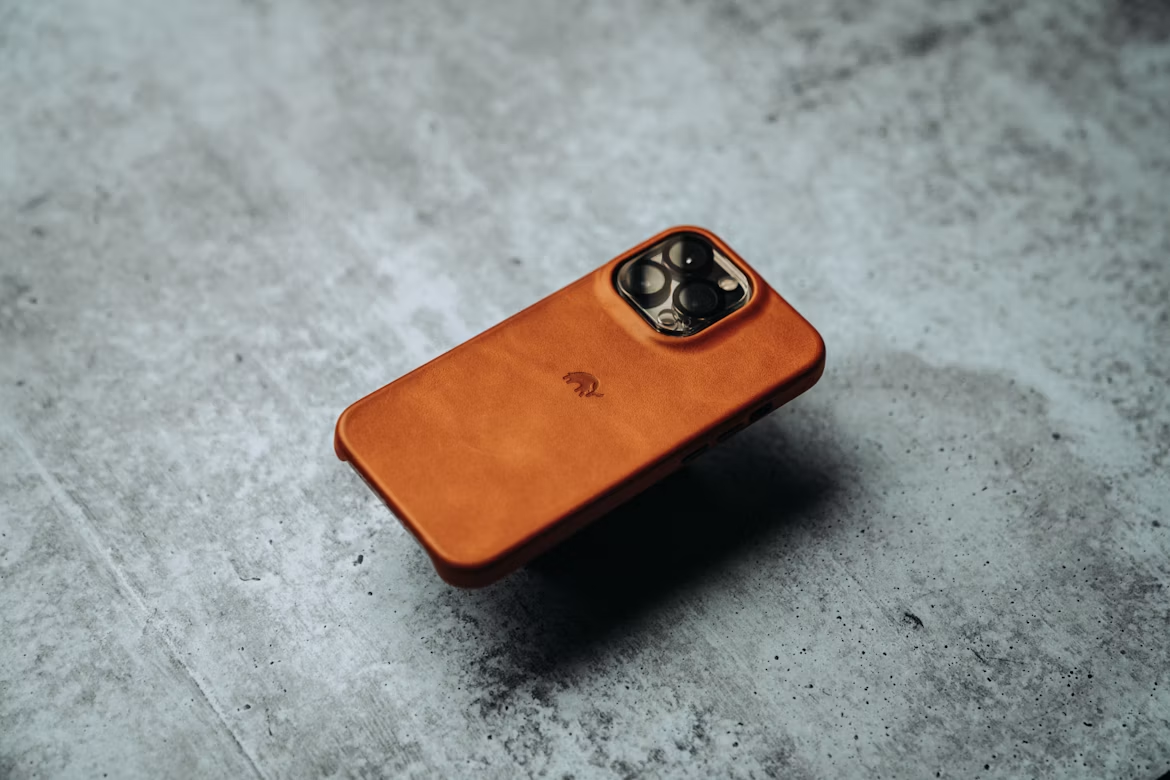

The smartphone accessories market has undergone a significant transformation over the past decade. Where mass-produced silicone covers once dominated retail shelves, discerning consumers and corporate buyers now gravitate toward premium materials that communicate personal style and professional polish. Among these materials, genuine leather stands apart for its tactile warmth, natural aging characteristics, and timeless appeal. A custom leather phone case is no longer a niche luxury item reserved for executive boardrooms. It has become a mainstream choice for anyone who values craftsmanship, durability, and individual expression in their everyday carry.
Industry analysts note that the global leather goods market continues to expand, driven by consumer preferences for sustainable, long-lasting products over disposable alternatives. Phone case manufacturers who specialize in leather have responded by offering unprecedented levels of personalization, from monogramming and color selection to bespoke design collaborations. This shift reflects a broader cultural movement toward intentional consumption, where the items we carry say something meaningful about who we are and what we value.
The Evolution of Leather in Mobile Accessories
Leather has been used in protective coverings for centuries, from book bindings to saddlery to watch straps. Its transition into the mobile phone accessories space was a natural progression as smartphones became indispensable personal items. Early leather phone cases were often generic pouches or slip covers that prioritized protection over aesthetics. Today, the industry has matured considerably, with manufacturers employing precision cutting, edge finishing, and molding techniques that rival those found in high-end fashion houses.
The demand for a custom leather phone case has surged as consumers recognize the difference between genuine craftsmanship and mass-market imitations. Professional buyers evaluate leather cases based on material grade, tanning process, stitching quality, and the precision of device-specific cutouts. These technical considerations separate truly premium products from those that merely look the part in product photography.
Full-grain leather remains the gold standard in the industry because it retains the natural texture and strength of the hide. Unlike corrected-grain or bonded leather, full-grain develops a unique patina over time that enhances its character rather than degrading its appearance. Manufacturers working with full-grain leather must source their materials carefully, as inconsistencies in the hide can affect the final product. This attention to material selection is one of the hallmarks that separates artisan producers from volume-driven factories.
Material Selection and Tanning Processes That Define Quality
The tanning process is arguably the most critical factor in determining the longevity and feel of a leather phone case. Vegetable tanning, which uses natural tannins derived from tree bark, produces firm leather, develops rich color over time, and is environmentally more responsible than chrome-tanned alternatives. Chrome tanning, while faster and more cost-effective, produces softer leather that may not age as gracefully. Expert buyers often specify vegetable-tanned leather for custom orders because they understand how the material will evolve with daily use.
Beyond the tanning method, the thickness and temper of the leather matter enormously for phone case applications. Too thick, and the case becomes bulky and difficult to slip into pockets. Too thin, and it fails to provide adequate drop protection or maintain structural integrity over months of handling. The sweet spot typically falls between 0.8 and 1.2 millimeters, though this varies depending on the leather type and the intended design of the case. Manufacturers like Runsuncase have refined their material specifications through extensive testing and customer feedback, arriving at formulations that balance elegance with everyday practicality.
Design Trends Shaping the Custom Leather Case Market
Current design trends in the custom leather phone case segment reflect broader movements in fashion and industrial design. Minimalism continues to dominate, with clean lines, subtle branding, and understated color palettes appealing to professionals who want their case to complement rather than compete with their wardrobe. Earth tones such as cognac, saddle brown, navy, and forest green remain perennial favorites, though bold colors like burgundy and emerald are gaining traction among younger demographics.
Texture plays an increasingly important role in differentiation. Pebbled grain, smooth calfskin, saffiano cross-hatch patterns, and even exotic-inspired embossing allow manufacturers to offer variety without departing from genuine leather. Some brands have introduced hybrid designs that combine leather with other premium materials such as carbon fiber accents or metal hardware, creating cases that appeal to technology enthusiasts who still appreciate traditional craftsmanship.
Personalization options have expanded dramatically in recent years. Beyond simple monogramming, customers can now choose custom debossing patterns, select thread colors for contrast stitching, specify interior lining materials, and even collaborate on entirely bespoke silhouettes. This level of customization transforms a phone case from a commodity accessory into a personal statement piece, and it commands premium pricing that reflects the additional labor and expertise involved.
Manufacturing Excellence and Quality Control Standards
The production of a high-quality custom leather phone case requires a convergence of traditional leatherworking skills and modern manufacturing precision. Computer-aided design ensures that cutouts align perfectly with device cameras, buttons, and ports, while hand-finishing techniques like edge painting and burnishing add the tactile refinement that machines alone cannot achieve. The best manufacturers maintain rigorous quality control protocols, inspecting each case at multiple stages of production to catch defects before they reach the customer.
Stitching quality serves as a reliable indicator of overall manufacturing standards. Look for consistent stitch spacing, properly tensioned thread, and reinforced stress points around corners and openings. Saddle stitching, where two needles pass through the same hole from opposite directions, is stronger than machine lock stitching because a break in one stitch does not cause the entire seam to unravel. While saddle stitching is more labor-intensive, many premium manufacturers consider it non-negotiable for products that must withstand daily handling and occasional drops.
Edge finishing is another area where expertise becomes immediately visible. Raw leather edges that are left untreated will fray and deteriorate quickly. Professional finishing involves sanding the edges smooth, applying multiple coats of edge paint or wax, and burnishing to create a sealed, polished surface. This process may be repeated three or four times to achieve the glossy, durable edge that characterizes luxury leather goods. When evaluating a custom leather phone case, running your finger along the edges tells you more about the manufacturer’s commitment to quality than almost any other single test.
Sustainability and Ethical Sourcing in Leather Production
Environmental consciousness has become a decisive purchasing factor for many consumers, and the leather industry has responded with greater transparency around sourcing and production methods. Responsible manufacturers now trace their leather supply chains back to specific tanneries and even individual farms, ensuring that hides are by-products of the food industry rather than primary harvest materials. Certifications from organizations like the Leather Working Group provide third-party verification of environmental compliance across water usage, chemical management, and waste treatment.
The shift toward vegetable tanning aligns with sustainability goals because it eliminates the heavy metals associated with chrome tanning processes. While vegetable tanning requires more time and produces leather with slightly different characteristics, many manufacturers and consumers consider the environmental trade-off worthwhile. Some innovative producers have begun experimenting with alternative tanning agents derived from olive leaves, rhubarb, and other renewable botanical sources, pushing the boundaries of what sustainable leather production can look like.
The Business Case for Custom Leather Accessories
For corporate buyers and resellers, custom leather phone cases represent an attractive product category with strong margins and high customer lifetime value. Unlike commodity phone cases that compete primarily on price, leather cases compete on quality, craftsmanship, and brand alignment. This allows retailers to maintain healthier margins while building customer relationships based on trust and satisfaction rather than constant discounting. Repeat purchase rates for leather accessories tend to be significantly higher than for synthetic alternatives, as customers who experience the quality difference rarely return to plastic or silicone options.
The corporate gifting segment presents another substantial opportunity. Companies seeking memorable, high-perceived-value gifts for clients and employees increasingly turn to custom leather accessories. A phone case with subtle company branding, crafted from premium leather, communicates sophistication and thoughtfulness in a way that generic promotional items cannot. Runsuncase and similar manufacturers have developed streamlined processes for handling bulk custom orders, making it feasible for businesses of all sizes to offer personalized leather cases as part of their corporate gifting programs.
From a supply chain perspective, partnering with established leather case manufacturers provides several strategic advantages. Experienced producers maintain relationships with vetted tanneries, employ skilled artisans, and operate quality management systems that ensure consistency across large production runs. They can also offer design consultation services, helping brands translate their visual identity into leather goods that authentically represent their values and aesthetic sensibilities.
Functional Innovation Within Traditional Craft
While leather phone cases are rooted in traditional craftsmanship, the category continues to evolve through functional innovation. Magnetic closure systems, integrated card holders, wireless charging compatibility, and convertible stand features represent just some of the ways manufacturers are adding utility without compromising the premium leather aesthetic. The challenge lies in incorporating these modern conveniences while maintaining the clean lines and minimal bulk that luxury buyers expect.
Wireless charging compatibility has become particularly important as more consumers adopt this technology. Leather itself does not interfere with wireless charging signals, but metal plates, thick padding, or certain adhesives can. Knowledgeable manufacturers design their cases with charging compatibility in mind from the outset, testing with multiple charging standards to ensure reliable performance. This forward-thinking approach to design prevents the frustration of discovering that a beautiful new case is incompatible with daily charging habits.
Drop protection remains a primary functional consideration, and modern leather cases have made significant strides in this area. Internal shock-absorbing layers, reinforced corners, and raised bezels around screens and camera modules provide meaningful protection without adding visible bulk. The combination of leather’s natural shock-dampening properties with engineered internal structures creates cases that protect effectively while maintaining the slim, elegant profile that leather aficionados prefer.
The Enduring Appeal of Crafted Leather Protection
The custom leather phone case market stands at an exciting intersection of traditional craftsmanship and modern consumer expectations. As smartphones continue to evolve in design and capability, the demand for cases that match their sophistication grows in parallel. Industry experts consistently identify material quality, manufacturing precision, personalization depth, and sustainable practices as the pillars that distinguish exceptional leather cases from adequate ones.
For consumers and businesses alike, investing in a well-crafted leather phone case is an investment in daily satisfaction. The tactile pleasure of handling premium leather, the visual evolution as the material develops its patina, and the confidence that comes from carrying a thoughtfully designed accessory all contribute to an experience that transcends mere device protection. As the industry continues to innovate while honoring the traditions that make leather such a compelling material, the future of custom leather phone cases looks as rich and textured as the material itself.


