


Ozone generators have become increasingly common in discussions about water treatment, food processing, aquaculture, and sustainable agriculture. Farmers treating irrigation systems, greenhouse operators managing water quality, and industrial facilities exploring disinfection solutions often ask the same question: do ozone generators actually work, or are their benefits exaggerated?
The answer depends on the application, system design, and operating conditions. Ozone generators can be highly effective for certain water treatment processes when they are properly engineered, correctly sized, and operated under suitable conditions.
What Is an Ozone Generator and How Does It Work?
An ozone generator produces ozone gas (O₃) by converting oxygen molecules (O₂) into a more reactive form. Most industrial ozone systems use corona discharge technology, where a high-voltage electrical field passes through oxygen-containing gas. This energy separates oxygen molecules, allowing individual oxygen atoms to combine with other oxygen molecules and form ozone.
The unstable nature of ozone is what makes it useful for treatment applications. As a powerful oxidizing agent, ozone can react with bacteria, viruses, organic compounds, and other contaminants. During this process, ozone breaks down pollutants and microorganisms before naturally decomposing back into oxygen.
Unlike some chemical disinfectants, ozone generally does not leave a long-lasting chemical residue in treated water. However, its effectiveness depends heavily on factors such as ozone concentration, contact time, water chemistry, and the efficiency of ozone transfer into the water.
The Science Behind Ozone as an Oxidizer
The performance of an ozone system depends on several important variables:
- Ozone concentration: The amount of ozone produced by the generator affects treatment capacity. Systems using concentrated oxygen sources can often produce ozone more efficiently than systems using regular air.
- Contact time: Ozone must remain in contact with water long enough to react with targeted contaminants.
- Transfer efficiency: The amount of ozone that dissolves into water rather than escaping as gas affects overall system performance.
Injection methods such as venturi systems, diffusers, and specialized mixing technologies are designed to improve ozone transfer. The best method depends on the specific treatment requirements, water characteristics, and system design.
When these factors are properly managed, ozone can provide effective oxidation and disinfection for many commercial and industrial applications.
Where Ozone Generators Are Used
Agricultural and Greenhouse Water Treatment
Greenhouse operations often require careful water management to reduce microbial growth, algae formation, and biofilm buildup in irrigation systems. Ozone treatment can help improve water quality without introducing certain chemical residues associated with traditional disinfectants.
However, performance depends on proper ozone dosage and system design. Excess ozone levels can also negatively affect sensitive biological systems, so monitoring is essential.
Aquaculture and Livestock Applications
Aquaculture facilities use ozone systems to help manage water quality, reduce organic compounds, and control certain microorganisms. Because ozone breaks down into oxygen, it can be useful in systems where minimizing chemical residues is important.
Successful use requires careful control because aquatic species can be sensitive to ozone exposure if treatment levels are not properly managed.
Industrial and Municipal Water Treatment
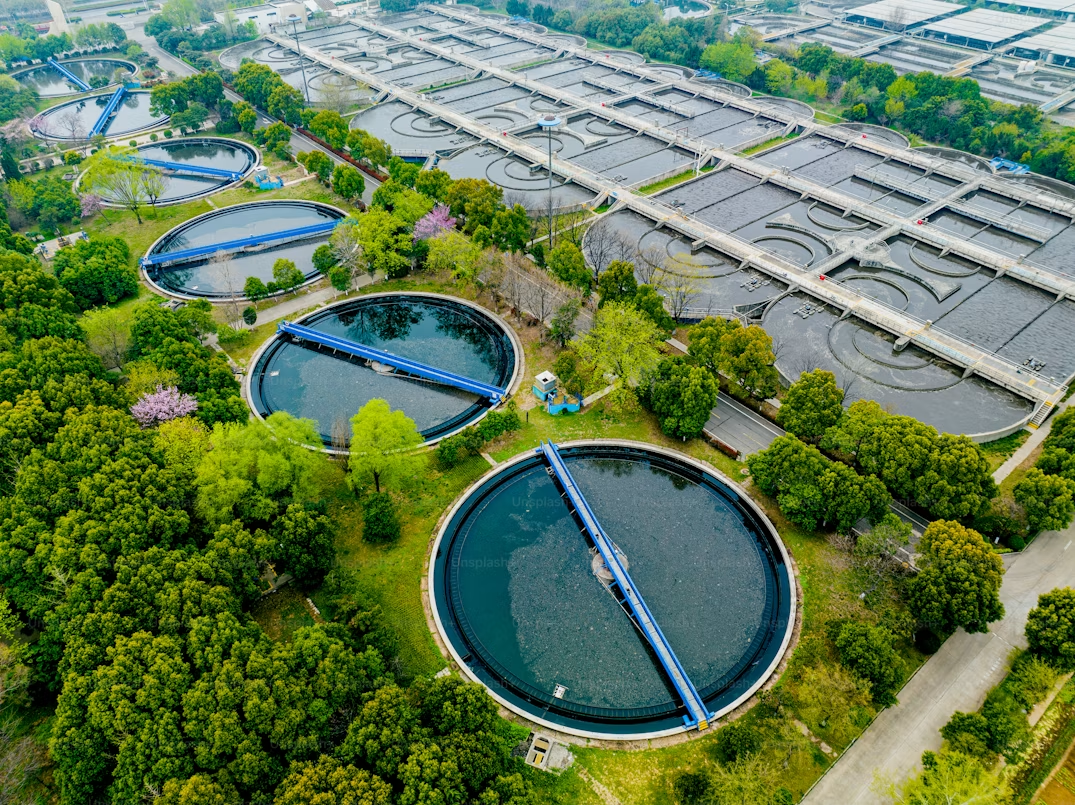
Ozone has been used for decades in municipal and industrial water treatment. Applications include drinking water processing, wastewater treatment, food and beverage operations, and water reuse systems.
Facilities may choose ozone because it provides strong oxidation capabilities and can reduce reliance on some chemical treatments. However, the appropriate treatment method depends on the facility’s goals, operating costs, and regulatory requirements.
Nano Bubble Technology and Ozone Water Treatment
One of the more significant advances in this field is the pairing of ozone with nano bubble generator water treatment technology.
Traditional ozone bubbles can rise quickly through water, limiting the amount of time available for reactions. Nanobubbles are much smaller and may remain suspended longer, potentially increasing the contact area between ozone and water.
Research into ozone nanobubble systems has examined their potential for improving gas transfer, reducing ozone waste, and enhancing treatment efficiency in certain applications. However, results depend on system design, operating conditions, and the specific contaminants being treated.
Rather than replacing conventional ozone engineering, nanobubble technology is better viewed as a possible improvement that may help optimize ozone delivery.
Common Misconceptions About Ozone Generators
One common misunderstanding is that all ozone generators operate in the same way. Residential ozone air devices and industrial ozone water treatment systems have very different designs and safety considerations.
Airborne ozone can irritate the respiratory system at elevated concentrations, which is why indoor ozone-generating devices require careful evaluation and proper safety controls.
Water treatment ozone systems are typically designed with controlled injection methods, monitoring equipment, and procedures to manage ozone exposure. Proper ventilation, safety sensors, and maintenance practices are important parts of responsible ozone system operation.
What Makes an Ozone System Effective?
Not every ozone generator will deliver the same results. A system that is too small, poorly installed, or incorrectly matched to the application may fail to provide adequate treatment.
Effective ozone systems typically consider:
- Required ozone production capacity
- Water quality characteristics
- Contaminant levels
- Contact time requirements
- Injection method
- Monitoring and maintenance procedures
The technology itself is only one part of successful ozone treatment. Proper engineering and ongoing operation are equally important.
Limitations of Ozone Treatment
Although ozone provides several benefits, it is not a universal solution.
Factors that can limit ozone performance include:
- High organic loads that consume ozone quickly
- Incorrect ozone dosage
- Poor mixing or transfer efficiency
- Lack of monitoring systems
- Improper system maintenance
In some applications, other treatment methods may be more practical due to cost, simplicity, or the need for longer-lasting disinfectant protection.
The Verdict
Ozone generators are a proven technology used in municipal, agricultural, aquaculture, and industrial water treatment applications. Their effectiveness comes from well-established oxidation chemistry rather than marketing claims.
However, results depend on proper system design, correct operation, and matching the technology to the specific treatment goal. When appropriately engineered, ozone can help reduce contaminants, improve water quality, and support more efficient treatment processes.
Emerging approaches such as nanobubble-assisted ozone systems may further improve ozone delivery efficiency, but they should be evaluated based on scientific evidence and real-world performance rather than assumptions alone.


